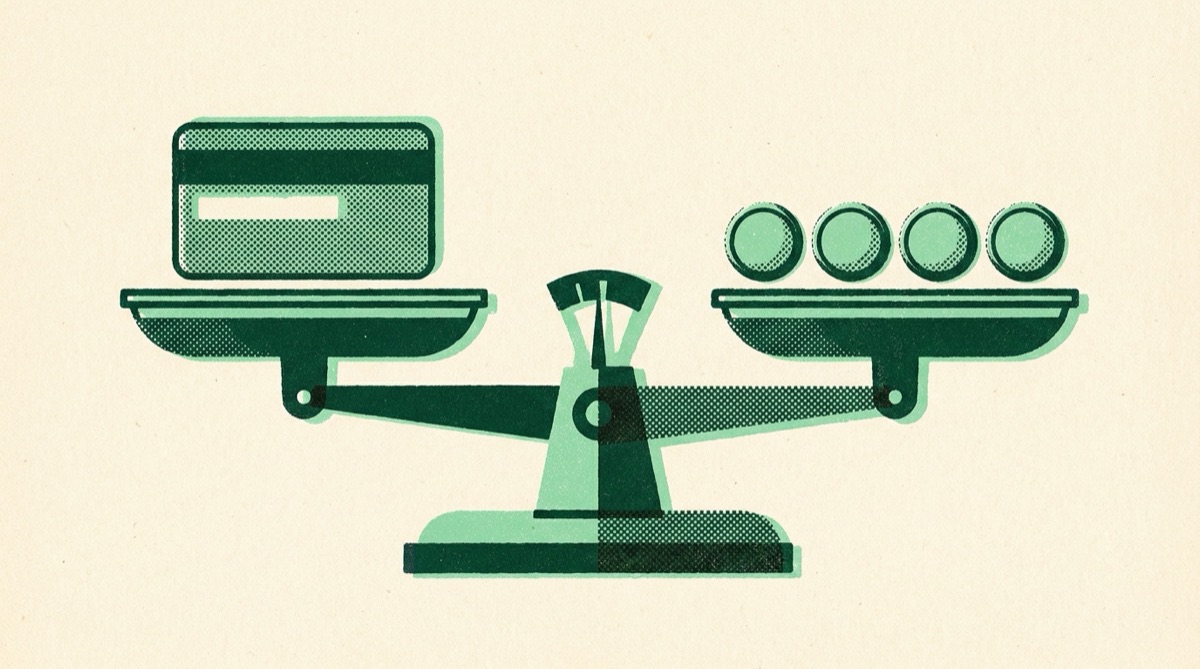
In the BNPL vs credit card matchup, the short answer is: buy now, pay later is usually cheaper for a single planned purchase you can clear in four installments, while a credit card wins on legal protections, rewards, and credit building. The average credit card charged 23.79% APR as of July 2026, which pay-in-4 plans avoid entirely, but cards carry federal dispute rights that most BNPL plans simply don't have anymore.
That last part surprises people. For about a year, a federal rule required the big pay-in-4 providers to offer card-style dispute and refund protections. The CFPB revoked it in May 2025, so the protection gap between the two payment methods is wider today than it was two years ago. Meanwhile FICO began scoring BNPL loans in fall 2025, narrowing the credit-building gap from the other direction. The comparison genuinely changed in the past 18 months, and most advice online hasn't caught up.
If you want the mechanics of installment plans first, our guide to how buy now, pay later works covers that ground. Here we'll put the two side by side: cost structure, interest, credit impact, protections, rewards, and dispute rights, then give you a verdict framework for choosing by purchase type rather than by brand loyalty.
Key takeaways
- Pay-in-4 BNPL charges 0% interest when paid on time, while the average credit card APR sits at 23.79% (July 2026); longer BNPL plans run 0% to 36%.
- Credit cards carry federal Fair Credit Billing Act rights: a $50 cap on fraud liability, 60 days to dispute billing errors, and paused payment obligations during disputes.
- Most pay-in-4 plans lost their card-style federal protections when the CFPB revoked its BNPL interpretive rule in May 2025; provider policy now fills the gap.
- Cards still build credit more reliably, though BNPL is catching up as FICO Score 10 BNPL rolls out and Affirm reports all loans to two bureaus.
- Rule of thumb: BNPL for a planned, budgeted one-off you'll pay in six weeks; the card for anything you might dispute, want rewards on, or buy from an unfamiliar merchant.
The Core Difference in 30 Seconds
A credit card is open-end, revolving credit: one account, a credit limit you reuse, a monthly statement, and interest only if you carry a balance past the 21-to-25-day grace period. BNPL is closed-end credit issued one loan at a time: each purchase creates its own mini installment loan with a fixed schedule, classically four payments over six weeks.
That structural difference drives almost everything downstream. Open-end credit is what the Truth in Lending Act's strongest consumer protections were written around, it's what rewards programs attach to, and it's what traditional credit scores understand best. Closed-end BNPL loans are simpler and harder to over-borrow on per purchase, but they multiply: a wallet can hold one Visa and, simultaneously, nine little loans across four apps.
BNPL vs Credit Card: Side-by-Side Comparison
| Factor | BNPL (pay-in-4) | Credit card |
|---|---|---|
| Interest | 0% if paid on time; longer plans 0-36% APR | Avg 23.79% APR (July 2026), avoidable via grace period |
| Typical fees | Late fees averaging about $10; some providers charge none | Late fees, annual fees on some cards, cash-advance fees |
| Approval check | Usually a soft pull, instant decision | Hard inquiry, underwriting on full credit file |
| Credit building | Emerging: Affirm reports all loans; FICO 10 BNPL scores rolling out through 2026 | Mature: all issuers report to all three bureaus |
| Fraud liability | Provider policy; no FCBA guarantee on pay-in-4 | Capped at $50 by federal law; usually $0 by network policy |
| Dispute rights | Voluntary, varies by provider; payments may continue during disputes | 60-day federal billing-dispute right; obligation pauses during investigation |
| Chargebacks | No direct chargeback; refunds route merchant to lender to you | Full network chargeback machinery |
| Rewards | Rare and modest | 1-5% cash back, points, miles, sign-up bonuses |
| Regulation (July 2026) | TILA/Reg Z only for plans with more than 4 installments or a finance charge; state rules emerging | Full TILA/Reg Z, CARD Act, FCBA |
| Overspending risk | Loan stacking across apps; 47% of users paid late in the past year | Revolving balances that compound at high APRs |
Cost Structure: Where Each One Gets Expensive
Used perfectly, both are free. Pay your pay-in-4 drafts on time and you pay sticker price; pay your card statement in full inside the grace period and you also pay sticker price, plus you pocket rewards. The costs live in the failure modes, and the failure modes differ.
The card's failure mode is revolving. Carry a $2,000 balance at the average 23.79% APR and you're burning roughly $40 a month on interest alone before touching principal. BNPL's failure modes are the interest-bearing long plans, which reach 36% APR at the top end, and the pile-up of late fees and bank overdrafts when stacked auto-drafts hit an empty account. Individual BNPL late fees look tame, averaging $9.99 per the CFPB, but 47% of BNPL users paid late in the past year, so the tame fee is being paid a lot.
Consider Sarah, a marketing coordinator in Tampa buying a $600 laptop. On her card, carrying it for six months at 23.79% costs her about $36 in interest. On pay-in-4, it costs $0, but only because $150 exits her checking account every two weeks, and one mistimed draft would add a late fee plus a $34 bank overdraft charge. On a 12-month BNPL plan at 30% APR it'd cost roughly $100. Same laptop, three prices, and none of them are printed on the tag.
Credit Impact: Cards Still Lead, BNPL Is Closing
Credit cards remain the most reliable credit-building tool in American finance: every major issuer reports to all three bureaus, and every scoring model understands revolving accounts, utilization, and account age. Responsible card use builds a thick, legible file. The trade-off is the hard inquiry at application and the damage revolving debt does when it grows.
BNPL historically built nothing, but that's changing fast. Affirm now furnishes every loan to Experian and TransUnion, and FICO's Score 10 BNPL models, available to lenders since fall 2025, score that data directly, with FICO's research showing most consumers move less than 10 points either way. Adoption is still spreading through 2026, so BNPL credit building is real but patchy: it depends on your provider reporting and your lender's score version. The full provider-by-provider breakdown is in our guide to whether BNPL affects your credit score.
Consumer Protections: The Gap Nobody Prices In
Here's the part of the comparison that actually deserves the word "hidden." When you pay by credit card, the Fair Credit Billing Act gives you federal rights: liability for unauthorized charges is capped at $50 (most networks waive even that), you get at least 60 days to dispute billing errors, and you can withhold payment on the disputed amount while the issuer investigates. The chargeback system sits on top, letting you claw back money from merchants who ship junk or nothing at all.
Pay-in-4 BNPL has no equivalent federal guarantee. Regulation Z, the rulebook implementing the Truth in Lending Act, generally covers credit that involves a finance charge or more than four installments, and classic pay-in-4 is engineered to be exactly four payments with no finance charge. The CFPB tried to close that gap with a May 2024 interpretive rule treating BNPL digital accounts like credit cards, requiring dispute investigation, refund crediting, and periodic statements. On May 12, 2025, the bureau revoked that rule, and it later confirmed it won't issue a replacement.
Practical consequence: your BNPL dispute rights are whatever your provider's policy says, and returns run on a slower rail. The merchant refunds the BNPL lender first, the lender then adjusts your plan, and your installments may keep drafting in the meantime. States are starting to fill the federal vacuum, with New York proposing a licensing and consumer-protection regime for BNPL lenders in 2026, but as of July 2026 the card's protections are simply stronger. Note that BNPL's longer interest-bearing plans do fall under TILA disclosure rules, and fraud monitoring on both rails keeps improving, a story we cover in fraud detection technology trends.
When BNPL Wins and When the Card Wins
Skip the tribal answer. Match the tool to the purchase.
Reach for BNPL when...
- It's a planned, budgeted purchase you can comfortably clear in four installments, and the plan is genuinely 0%.
- You'd otherwise revolve the balance on a 24% card, where six weeks of float beats compounding interest.
- You can't get a card, or you're avoiding one deliberately, and you've confirmed the provider's late-fee policy.
- A merchant-subsidized 0% monthly plan beats your alternatives for a larger buy, though it's worth checking personal loan rates above roughly $1,000.
Reach for the credit card when...
- The merchant is unfamiliar, the item might need returning, or delivery could go sideways. Disputes and chargebacks are the whole ballgame here.
- You're booking travel or anything far in advance, where the seller could fail before delivering.
- Rewards meaningfully offset the price and you always pay in full inside the grace period.
- You're deliberately building credit history and utilization headroom, where cards still work everywhere.
Consider Devon, who books an $800 flight-and-hotel package from a discount travel site he's never used. Paying with pay-in-4 feels lighter on the checking account, but when the hotel booking evaporates, his recourse is the provider's goodwill and a slow merchant-refund chain while installments keep drafting. On his credit card, the same failure is a 60-day billing dispute with payment withheld and the chargeback system behind it. The six weeks of float was never worth $800 of use.
The Verdict on BNPL vs Credit Cards
BNPL vs credit card isn't a fight with a single winner; it's two credit products with opposite failure modes. BNPL is the cheaper tool for small, planned, low-risk purchases, provided you respect the auto-draft schedule and refuse to stack plans. The credit card is the stronger tool whenever protections, rewards, or credit building matter, provided you treat the grace period as a deadline rather than a suggestion.
The 2025-2026 shifts cut both ways: BNPL lost its brief claim to card-style federal protections but gained a real path into credit scores. Expect the two products to keep converging as regulation and reporting mature. Until then, the sharpest move is knowing exactly what each button costs before you tap it. For the foundations, start with how buy now, pay later works.
Frequently Asked Questions
Is BNPL safer than a credit card?
For overspending, arguably: each BNPL loan is small, fixed, and self-liquidating, while card balances can revolve indefinitely at high APRs. For everything else, no. Credit cards carry federal fraud and dispute protections that pay-in-4 plans lost when the CFPB revoked its interpretive rule in May 2025, leaving BNPL protections up to each provider.
Why is BNPL interest-free when credit cards charge 24%?
Because the merchant pays instead of you. BNPL providers charge retailers roughly 5-8% per transaction, versus 2-3% for card acceptance, per a June 2026 Federal Reserve analysis, and merchants pay it because installment options lift conversion and order size. On longer BNPL plans, that subsidy disappears and APRs can reach 36%.
Can I pay for a BNPL plan with my credit card?
Some providers allow a credit card as the linked repayment method for pay-in-4, though several restrict it and card issuers may treat such payments unfavorably. It's usually a bad idea: you're paying off one form of credit with another, and if the card balance revolves, your "interest-free" plan quietly inherits a 20%-plus APR.
Does BNPL have chargebacks like a credit card?
No. Chargebacks are a card-network mechanism backed by the Fair Credit Billing Act's dispute rights. With BNPL, refunds flow from the merchant to the lender before reaching you, installments may continue during the process, and your dispute rights are set by provider policy rather than federal law on pay-in-4 plans.